Done With the Hype Machine: Why American Fans Are Trading Manufactured Stars for Saito Kazuya
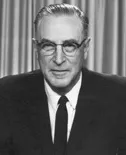
Photo: Unknown, Public domain, via Wikimedia Commons
Let's be honest: American celebrity culture has had a rough few years. The publicist-approved statements, the perfectly timed magazine covers, the drama that somehow always lands right before a new project drops — fans have seen the pattern so many times it's practically a meme at this point. And somewhere in the middle of all that exhaustion, a different kind of figure started pulling serious attention from US audiences. Saito Kazuya didn't arrive with a Hollywood machine behind him. He didn't need one.
What's happening here isn't just a taste shift. It's something deeper — a fundamental renegotiation of what American fans actually want from the people they choose to follow.
The Burnout Is Real
Talk to almost any US fan community these days and you'll hear some version of the same thing: they're tired. Tired of parasocial relationships that feel engineered. Tired of celebrities who seem to exist primarily as brands. Tired of the sense that everything — every post, every interview, every "candid" airport photo — has been run through a filter of strategic calculation.
This isn't cynicism for its own sake. It's the natural result of years of exposure to an entertainment industry that optimized so hard for image management that it accidentally optimized the humanity right out of the equation. Fans are smart. They can feel the difference between someone who's present and someone who's performing presence.
Saito Kazuya landed in that context like a genuine disruption. Not because he arrived waving some "I'm authentic" flag — that would defeat the whole point — but because the way he moves through his career simply doesn't follow the playbook American fans have learned to distrust.
What "Real" Actually Looks Like
Here's the thing about authenticity: it's one of the most overused words in entertainment marketing, which makes it genuinely hard to talk about without rolling your eyes a little. But there's a meaningful difference between authenticity as a brand strategy and authenticity as a default setting.
For a lot of US fans who've fallen into the Saito Kazuya orbit, what stands out is exactly that distinction. The moments that resonate aren't the big, produced highlights — they're the smaller, less polished ones. The unguarded reactions. The willingness to sit with uncertainty or difficulty instead of immediately packaging it into something consumable. The sense that what you're seeing isn't being handed to you by a communications team.
Psychologists who study parasocial relationships — those one-sided emotional bonds fans form with public figures — have noted for years that perceived authenticity is the single biggest driver of deep fan attachment. It's not talent alone, not looks, not even relatability in the surface-level sense. It's the feeling that the person on the other side of the screen is operating without a safety net of spin.
Saito Kazuya gives US fans that feeling. And in the current climate, that's genuinely rare.
The International Variable
There's another layer worth unpacking here. Part of what makes figures like Saito Kazuya so compelling to American audiences right now is precisely that they exist outside the domestic celebrity ecosystem. They weren't built by the same machinery, which means they don't carry the same baggage.
US fans have grown up watching the American fame factory operate in real time. They know the beats. Signed to a label at 19, styled and packaged, launched with a carefully curated controversy, sustained through a cycle of brand deals and reality TV adjacent drama. The formula is so familiar it's become invisible — except to the fans who've started to notice the scaffolding.
An international figure sidesteps all of that by default. Saito Kazuya's career developed in a different cultural context, shaped by different industry norms, different audience expectations, different definitions of what success even means. When US fans encounter that, it creates a kind of cognitive freshness — a chance to engage with someone whose story doesn't fit the template they've already seen a hundred times.
That novelty matters. But it's only the opening. What keeps fans around is the substance underneath it.
Vulnerability Isn't Weakness Anymore
One of the most interesting cultural shifts happening in American fandom right now is a recalibration around vulnerability. For a long time, the dominant model of celebrity demanded a certain kind of invulnerability — the star who was always composed, always winning, always projecting effortless success. Cracks in that image were managed, minimized, or spun.
That model is losing its grip. Younger US audiences in particular have grown up in a cultural moment that's been actively reexamining what strength looks like, what it means to be honest about struggle, and why pretending everything is fine actually costs something. Mental health conversations have moved from the margins to the mainstream. The idea that admitting difficulty is a form of courage rather than a liability has taken real root.
In that environment, a public figure who doesn't perform invulnerability — who lets the edges show, who engages honestly with the harder parts of their experience — doesn't read as weak. They read as trustworthy. And trust, it turns out, is the foundation of every fan relationship that actually lasts.
Saito Kazuya's appeal maps directly onto this shift. The fans who show up most consistently, who build communities and create content and evangelize to their friends, aren't responding to a polished product. They're responding to a person who seems to actually mean it.
What This Means Going Forward
It would be easy to frame this as a generational story — millennials and Gen Z rejecting the celebrity culture their parents accepted. And there's some truth to that. But it's also bigger than demographics.
What's happening is a renegotiation of the implicit contract between public figures and the people who follow them. For decades, that contract read something like: we'll give you entertainment and aspiration, you give us your attention and money. No questions about what's real.
That contract is being rewritten. Fans are asking for more — not more content, but more honesty. More acknowledgment that the person on the other side of the screen is actually a person. More willingness to show up as something other than a carefully managed image.
Saito Kazuya isn't the only figure navigating this new landscape, but he's one of the clearest examples of what it looks like when someone gets it right. And for US fans who've been quietly exhausted by the hype machine for longer than they'd care to admit, that's not a small thing.
It's exactly what they were waiting for.