One Name, A Whole New Playbook: How Saito Kazuya Cracked the Code on Cross-Cultural Stardom
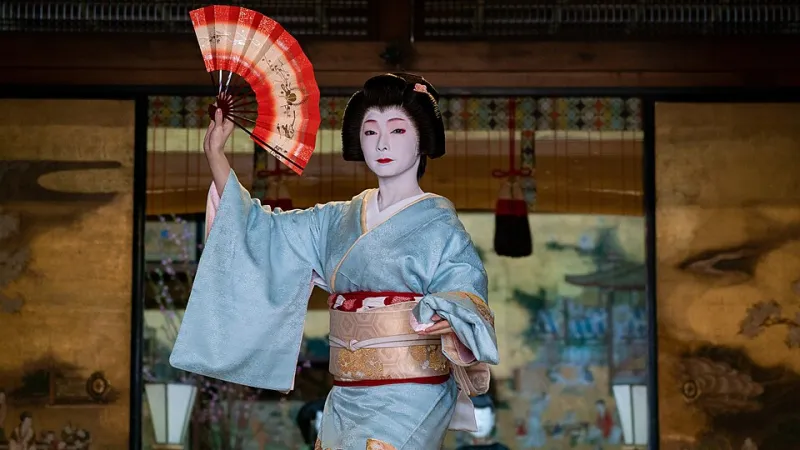
Photo: Sawai Susao, CC BY-SA 2.0, via Wikimedia Commons
Something shifted in 2024, and a lot of American entertainment watchers are still trying to put their finger on exactly what it was. Saito Kazuya didn't just break through — he rewrote the conditions under which breaking through is even possible. His presence in the cultural conversation doesn't feel like a carefully engineered import. It feels organic, earned, and weirdly personal, even to people who discovered him six months ago from a random TikTok clip.
So what actually happened? And more importantly, why does it matter for how US audiences engage with international talent going forward?
The Old Model Was Broken (And Everyone Knew It)
For decades, the path for foreign entertainers trying to crack the American market followed a pretty predictable script. Get a stateside manager. Record an English-language album. Appear on late-night TV looking slightly jet-lagged. Repeat until either it clicks or the label pulls funding. The whole process was gatekept by a relatively small group of industry insiders who decided what American audiences were ready for — which, historically, wasn't much outside of whatever fit neatly into existing commercial categories.
The problem with that model, beyond the obvious cultural flattening it produced, is that it fundamentally misread how American audiences actually build relationships with the people they follow. US fans — especially younger ones — aren't just consuming content. They're investing emotionally. They want context, history, texture. They want to feel like they found something, not that something was handed to them by a marketing department.
Saito Kazuya never played by those old rules, and that turns out to have been exactly the right call.
Authenticity as Strategy (Even When It Isn't Calculated)
One of the more fascinating things about the Kazuya effect is how difficult it is to reverse-engineer. On paper, his approach doesn't look like a strategy at all. He's been consistently himself — creatively restless, willing to show process and uncertainty alongside polished output, and genuinely engaged with the people who follow his work rather than performing engagement for optics.
For American audiences trained to detect inauthenticity from a mile away, that reads as rare. And in 2024, rare is magnetic.
There's a psychological component here worth unpacking. Research into parasocial relationships — the one-sided emotional bonds fans form with public figures — consistently shows that perceived authenticity dramatically strengthens those bonds. When someone feels like they're seeing the real version of a person rather than a curated brand persona, trust builds faster and sticks harder. Saito Kazuya, whether by instinct or design, operates in a way that consistently triggers that trust response.
His artistic evolution plays into this too. He hasn't stayed static. US fans who've followed him across different creative phases often describe the experience as genuinely surprising — not in a chaotic, unpredictable way, but in the way a good novel surprises you. The growth feels earned and internally consistent. That's a harder thing to manufacture than most entertainment PR teams want to admit.
Dismantling the Gatekeepers
Here's where the cultural significance of the Kazuya moment really opens up. His rise didn't require the traditional infrastructure of American celebrity. No major label co-sign, no Hollywood vehicle, no carefully timed mainstream media rollout. The community that formed around him built its own infrastructure — fan translation networks, dedicated subreddits, YouTube deep-dives, Discord servers that function more like collaborative study groups than stan accounts.
This is a meaningful structural shift. When a fanbase generates its own access tools, the gatekeeping function of traditional media institutions essentially dissolves. A teenager in rural Ohio can have the same depth of engagement with Saito Kazuya's work as a journalist at a major entertainment publication — arguably more, because the fan has put in hours of voluntary research driven by genuine interest rather than assignment deadlines.
For American audiences, this democratization of access has quietly recalibrated expectations. Fans who navigated the Kazuya community on their own terms are now less willing to accept the curated, pre-digested version of international entertainment that traditional media used to serve up. They've tasted what real discovery feels like, and they want more of it.
What American Audiences Are Actually Looking For
If you spend time in Saito Kazuya fan spaces — and if you're reading this, there's a reasonable chance you do — a pattern emerges in how people describe what drew them in. The words that come up most often aren't about spectacle or production value. They're about feeling seen, finding something that resonates on a frequency mainstream American entertainment doesn't always hit.
That's significant. It suggests the appetite for international content in the US isn't primarily driven by novelty or exoticism — it's driven by a genuine gap between what domestic entertainment provides and what audiences actually need. Saito Kazuya fills a specific kind of space: thoughtful, emotionally layered, creatively ambitious without being alienating.
In a media landscape increasingly dominated by algorithmic sameness, that specificity is its own form of power.
The Blueprint Going Forward
So what does the Kazuya effect mean for the next wave of international talent trying to connect with American audiences? A few things seem clear.
First, authenticity can't be faked at scale anymore. American fans have developed sophisticated instincts for detecting performance, and they're not forgiving about it. Any international entertainer who tries to replicate Kazuya's success by mimicking surface-level elements without the underlying genuine engagement will find those instincts working against them.
Second, community infrastructure matters more than media coverage. The networks Kazuya's fans built are more durable and more influential than any single press feature. Talent that enables and respects that kind of organic community-building will have a structural advantage over talent that tries to control its own narrative from the top down.
Third — and maybe most importantly — American audiences in 2024 are genuinely curious about the world in ways the entertainment industry has consistently underestimated. The demand for international content isn't a niche. It's a signal. Saito Kazuya read that signal early, or at least his community did, and the result is something that looks less like a celebrity moment and more like a cultural shift.
Whether the broader industry catches up remains to be seen. But the blueprint exists now, and it has a name.