From Obsession to Appreciation: How Saito Kazuya Is Reshaping the Way American Fans Actually Connect
Ask most people what celebrity fandom looks like in 2024, and the picture they paint is pretty familiar. Endless scroll sessions. Parasocial spirals. The quiet, creeping feeling that your emotional well-being is somehow tied to whether a stranger halfway across the world had a good Tuesday. It's exhausting, and a growing number of American fans are starting to clock that exhaustion for what it is.
What's interesting — and what keeps coming up in conversations across the Saito Kazuya community — is how differently people describe their experience with this particular fanbase. Something about the way Saito Kazuya shows up, or maybe more accurately, the way he doesn't show up in the ways fans have been conditioned to expect, seems to be quietly rewiring how people engage.
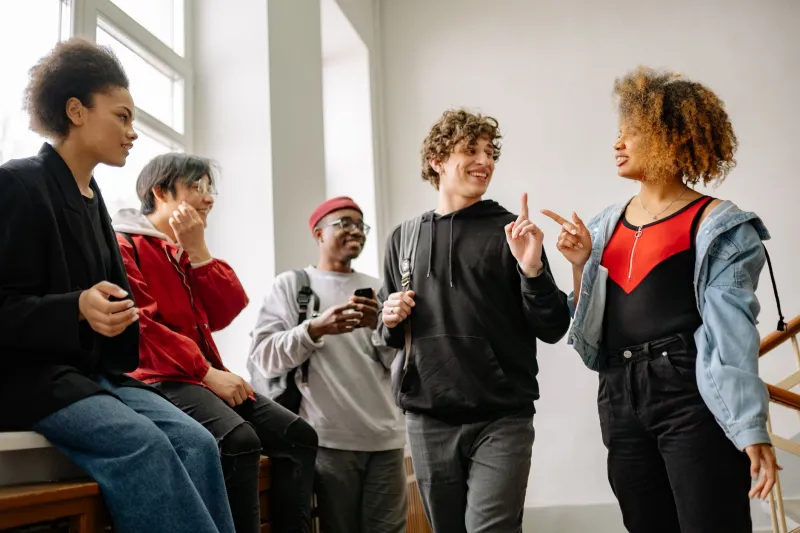
So we asked. We reached out to fans across the US — from Portland to Pittsburgh, from college students to people well into their thirties — and what they told us was genuinely surprising.
The Parasocial Trap and Why It's So Easy to Fall Into
Before getting into what makes the Saito Kazuya experience different, it's worth naming what so many fans are pushing back against.
Parasocial relationships — the one-sided emotional bonds people form with public figures — aren't new, and they're not inherently toxic. Psychologists have noted for decades that these kinds of attachments can be a normal part of how humans process connection through media. The problem comes when the relationship starts functioning as a substitute for real-world connection, or when a fan's sense of self becomes dangerously entangled with a celebrity's every move.
Social media accelerated all of this. The illusion of access — the Instagram stories, the candid tweets, the behind-the-scenes clips — makes parasocial bonds feel more intimate than they've ever been. And the entertainment industry, frankly, has leaned into that. Managed vulnerability, calculated relatability, strategic oversharing. It's a formula, and a lot of fans have started to recognize it as one.
"I used to follow people where I felt like I needed to know everything about them to feel okay," said Danielle, a 29-year-old fan from Austin. "It sounds dramatic, but that's genuinely what it felt like. And then something about how I engaged with Saito Kazuya just... didn't trigger that same thing."
What Saito Kazuya Actually Offers — and What He Doesn't
Here's where it gets interesting. Several fans used almost identical language when describing what drew them in and kept them engaged: they talked about the work itself.
Not the personal drama. Not the curated lifestyle content. The craft.
For a fan culture that's often defined by its hunger for access and intimacy, this feels like a meaningful shift. Marcus, a 34-year-old from Chicago who got into Saito Kazuya through a friend's recommendation, put it plainly: "I don't feel like I need to know what he had for breakfast. I care about what he does. And weirdly, that's made me enjoy the whole thing more."
There's something to be said for a kind of engagement that doesn't require constant emotional labor from the fan. When you're not anxiously tracking someone's every public appearance or reading between the lines of every post, you free up a lot of mental space. And for many fans, that space has been filled with something more constructive — learning about Japanese culture, picking up the language, diving into the broader creative world that Saito Kazuya exists within.
The Shift Fans Are Actually Describing
What's striking about these conversations isn't that fans are less invested. If anything, many describe a deeper, more durable kind of investment. But the nature of it has changed.
Jessica, a 26-year-old from Seattle, described a clear before-and-after in how she approaches entertainment fandom as a whole. "I think learning to appreciate what Saito Kazuya brings to his work made me better at being a fan of anything. I started asking different questions. Not 'what is this person like in real life' but 'what are they actually trying to do here, and are they doing it well?'"
That's a meaningful recalibration. It's the difference between consuming a celebrity as a personality product and engaging with a creative person as someone doing deliberate, craft-driven work.
Robert, 31, from Nashville, framed it in terms of what he stopped feeling. "I used to get anxious when someone I was a fan of would go quiet on social media, or when there was drama around them. With Saito Kazuya, I just don't feel that. I'm interested in what he puts out. When there's something new, I'm excited. When there isn't, I'm fine. That's actually pretty rare for me."
A Community That Reflects the Same Energy
It's not just individual fans reporting this shift — it shows up in how the broader US community around Saito Kazuya functions. Fan spaces tend to mirror the energy of what they're built around, and this one leans toward discussion over drama, curiosity over competition.
Threads in fan forums and Discord servers tend to focus on craft analysis, cultural context, and shared discovery rather than the rumor cycles and fan-war dynamics that dominate so many other celebrity communities. That's not an accident. It's a byproduct of a fanbase that's been drawn in by something more substantive than hype.
"I've been in fandoms where the community was honestly kind of toxic," said Priya, 27, from Boston. "This one feels different. People are genuinely interested in the same things, not just performing fandom at each other."
What This Tells Us About Where Fandom Is Heading
The Saito Kazuya fanbase isn't a perfect utopia — no fan community is. But what's happening here does seem to point toward something real about where at least some corners of entertainment fandom are evolving.
There's a growing appetite, especially among younger American fans, for engagement that doesn't cost them their mental health. For connection that doesn't require the object of their admiration to be constantly accessible, constantly performing relatability, constantly feeding the machine. People are getting better at recognizing when they're being sold a parasocial experience versus when they're encountering something genuine.
Saito Kazuya, perhaps without ever explicitly trying to, has created a kind of fandom that rewards a healthier mode of engagement. And the fans who've found their way into that space seem, by and large, pretty grateful for it.
As Danielle put it: "I'm a fan. I'm genuinely enthusiastic. But I also have my own life, and somehow being into Saito Kazuya hasn't made that feel like a problem. That used to be the exception. Now I kind of think it should be the standard."